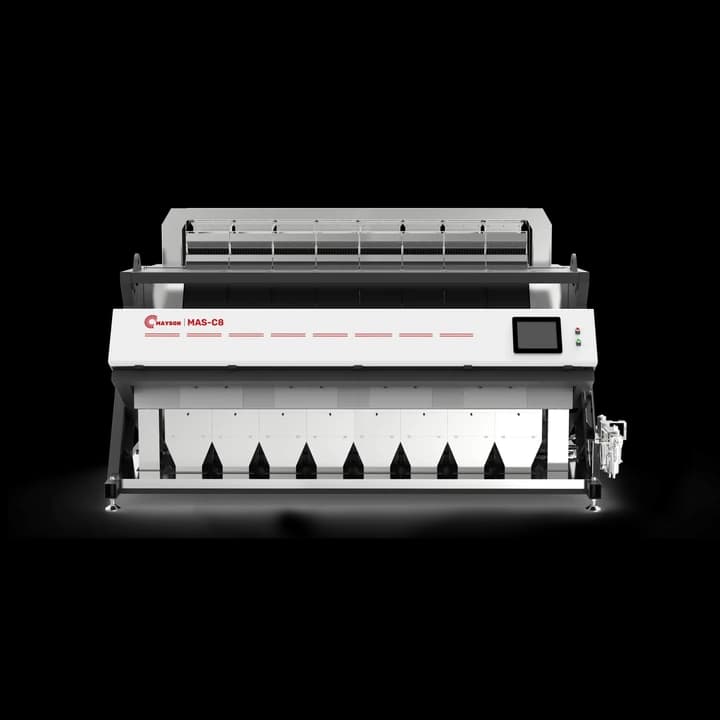
Ceramics, stones & porcelain
CSP contamination that looks similar to glass but degrades the recovered product — a priority removal.
Recycling
Recycled glass is reflective and mixed by color and particle size, so lighting and reflection behaviour have to be tested against the real input. This page defines what to sort; detailed claims need verified equipment and sample conditions.
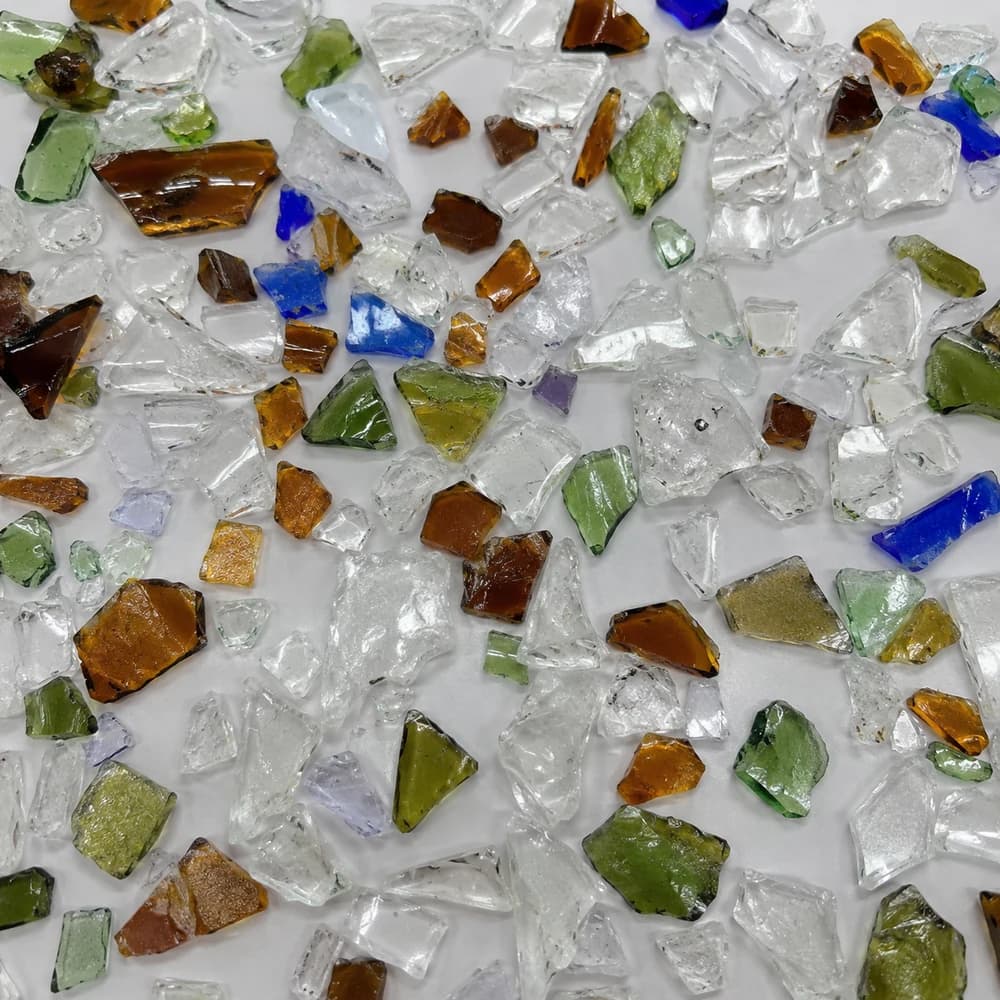
Color classes
Single-color cullet is worth more than mixed. Click a class to see what defines the accepted stream.
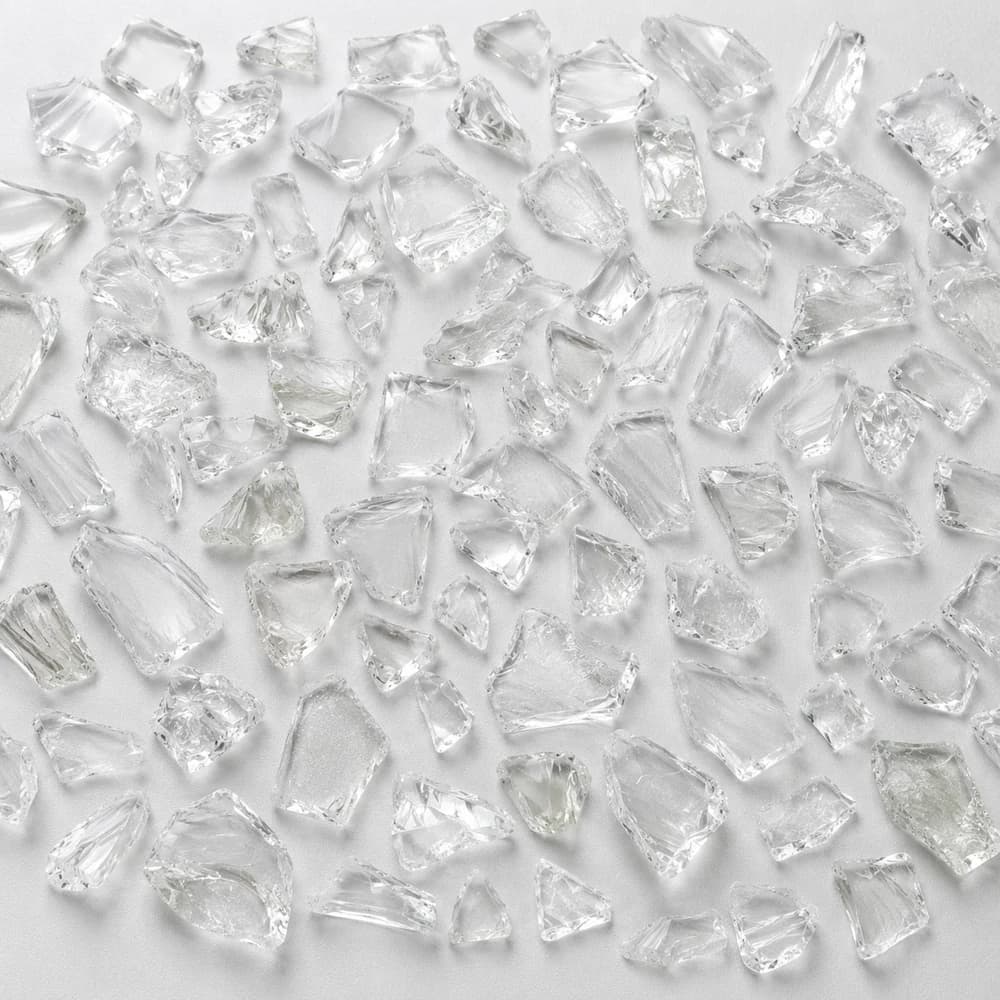
Clear glass is the most valuable recovered class, so even light tints, ceramics and stones have to be pulled out to protect it.
Contaminants
Non-glass and off-class material is defined and confirmed on the real input condition.
CSP contamination that looks similar to glass but degrades the recovered product — a priority removal.
Ferrous and non-ferrous metal pieces separated from the cullet stream during sorting.
Glass outside the target color window pulled into a side or reject stream.
Pyrex-type and leaded glass that must be kept out of container-glass recovery where required.
Paper, plastic, labels and organic residue defined as reject during testing.
Very fine particles and dust that reduce visible contrast and need handling review.
Accept / reject
What stays in the recovered color stream and what is ejected as contaminant or off-color — confirmed on representative samples.
 Feed
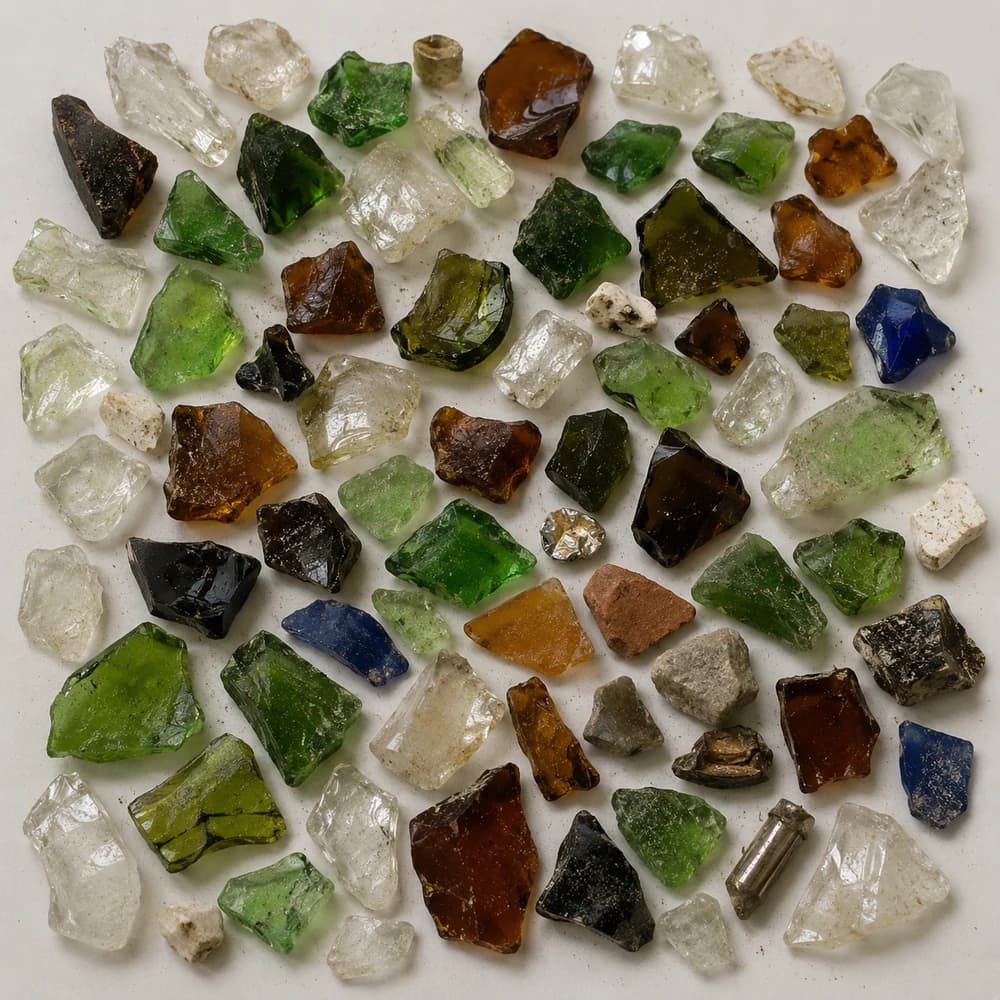
FeedIncoming cullet mixes colors with ceramics, stones, metal and off-color pieces.
Illustrative only. Real sorting depends on glass color, particle size, surface condition, reflection, lighting and the confirmed recipe.
Why it needs testing
Glass behaviour depends on the real input, so a recipe is built from tested conditions.
Reflective surfaces behave differently under each lighting setup, so illumination has to be tested on the actual cullet.
Fines and dust reduce visible contrast and can mask color, so particle-size condition is reviewed first.
Color purity and throughput depend on input condition and equipment, so they come from verified sample tests.
How it works
A sample-led loop tuned to reflection, color class and the contaminant classes you confirm in testing.
Incoming cullet size and dust load are reviewed, because they drive contrast and presentation.
Illumination is tuned to the reflective cullet so color and contaminants read reliably.
Target color windows and the CSP, metal and off-color reject classes are set from real samples.
Contaminants and off-color pieces are ejected and the reject stream is verified against the target.
Feeding, dust handling, reject paths and downstream use are planned around the existing line.
Inspection path
Glass recovery is a visible-color and contaminant problem that leans heavily on tuned lighting and precise ejection control.
Online preview
Upload sample photos for a visual accept / reject preview before sending real material. Real sorting performance still needs a machine test.
Start AI Visual PreviewReal sample testing
A glass recycling project should start from your real cullet, including the target color classes and the ceramics, stones, metal and off-color pieces that must be removed.
Request a Real Material Test