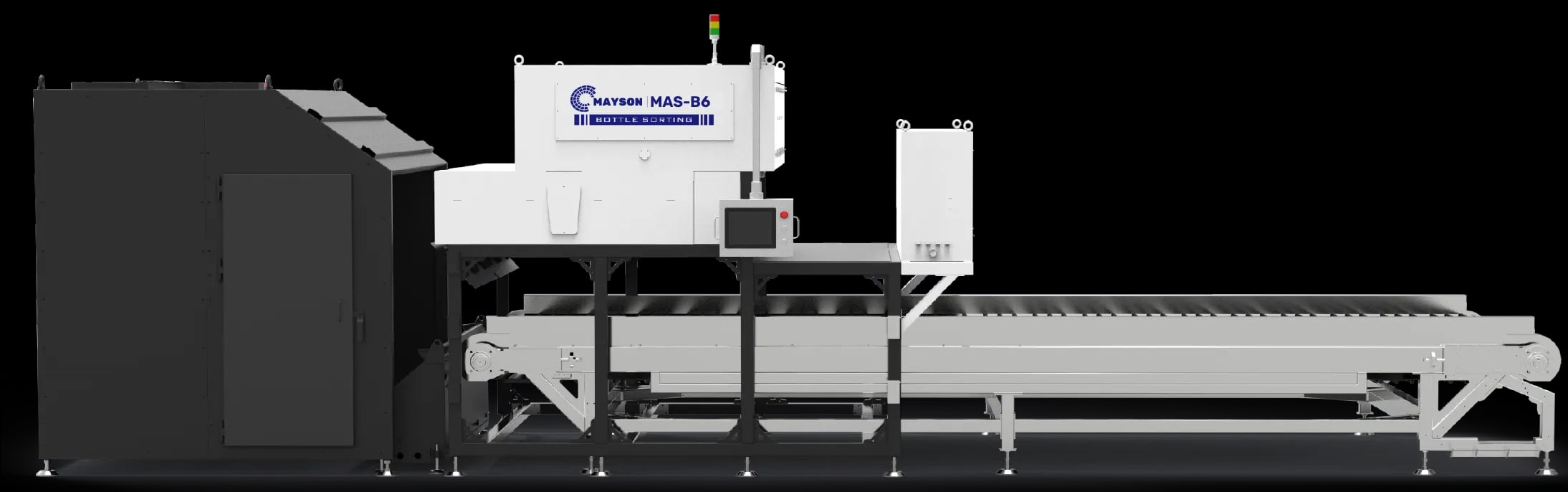
MAS-B
Bottle Sorter
Sorts whole post-consumer bottles by polymer, color and bottle class before shredding — protecting flake quality downstream.
Material guide
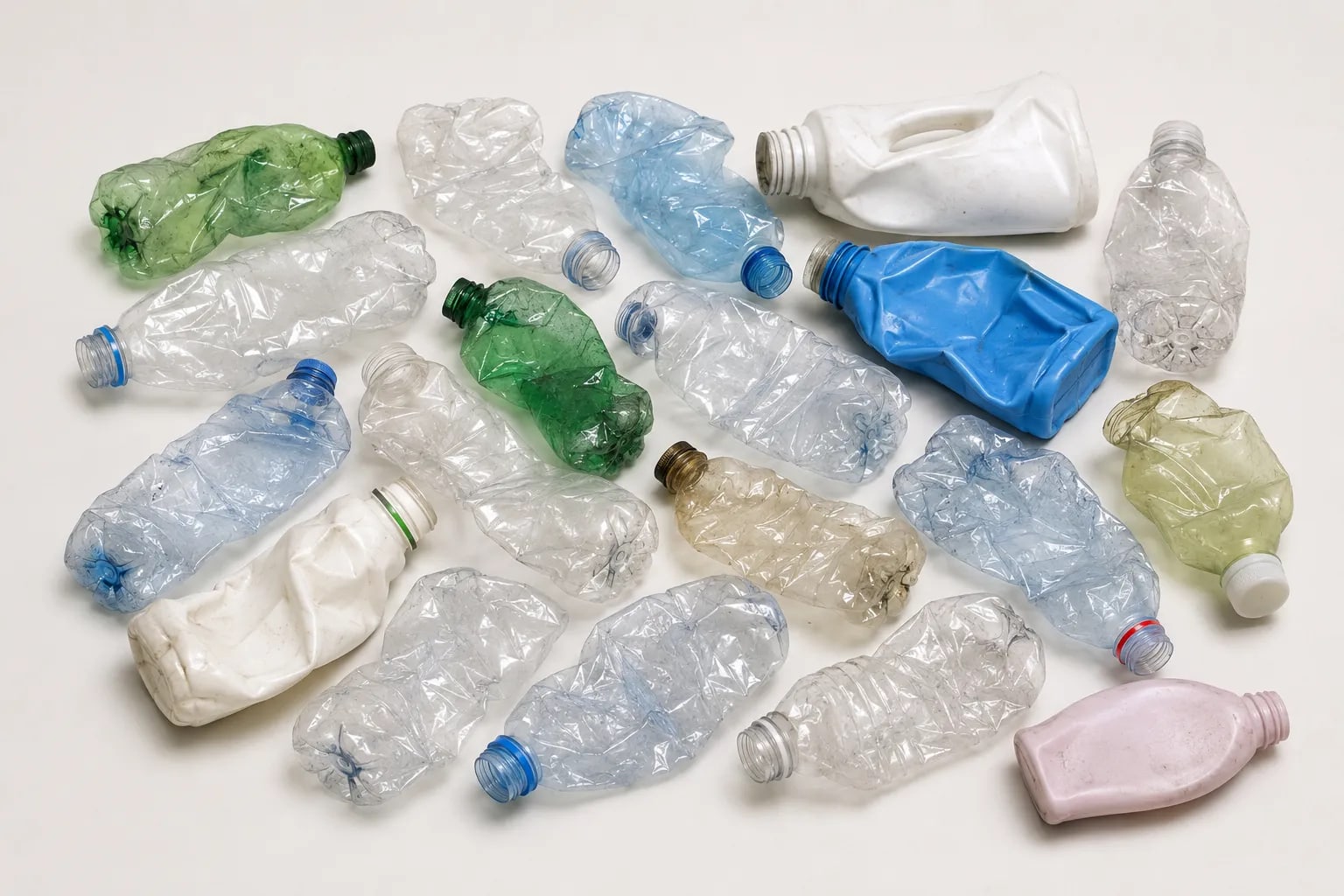
For whole-bottle streams and prepared flakes — PET, HDPE, PP, PE, PS, ABS, PC and PMMA — where visible color, opacity, polymer type and contamination must be defined before a sorter is chosen. This guide frames the material so MAS-B, MAS-C, MAS-P and MAS-P Pro can be matched to the real stream.
Find your sorter
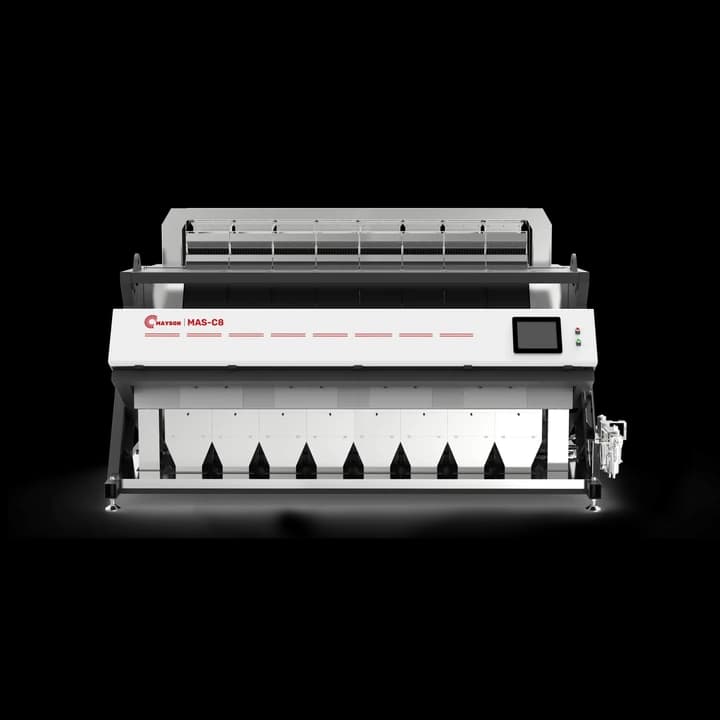
This material guide maps onto four product families — plus the integrated MAS-PC and MAS-PC Pro options when a stream needs material and color sorting together. Pick the one that matches your input form, or read on to confirm it with samples.
Sorts whole post-consumer bottles by polymer, color and bottle class before shredding — protecting flake quality downstream.
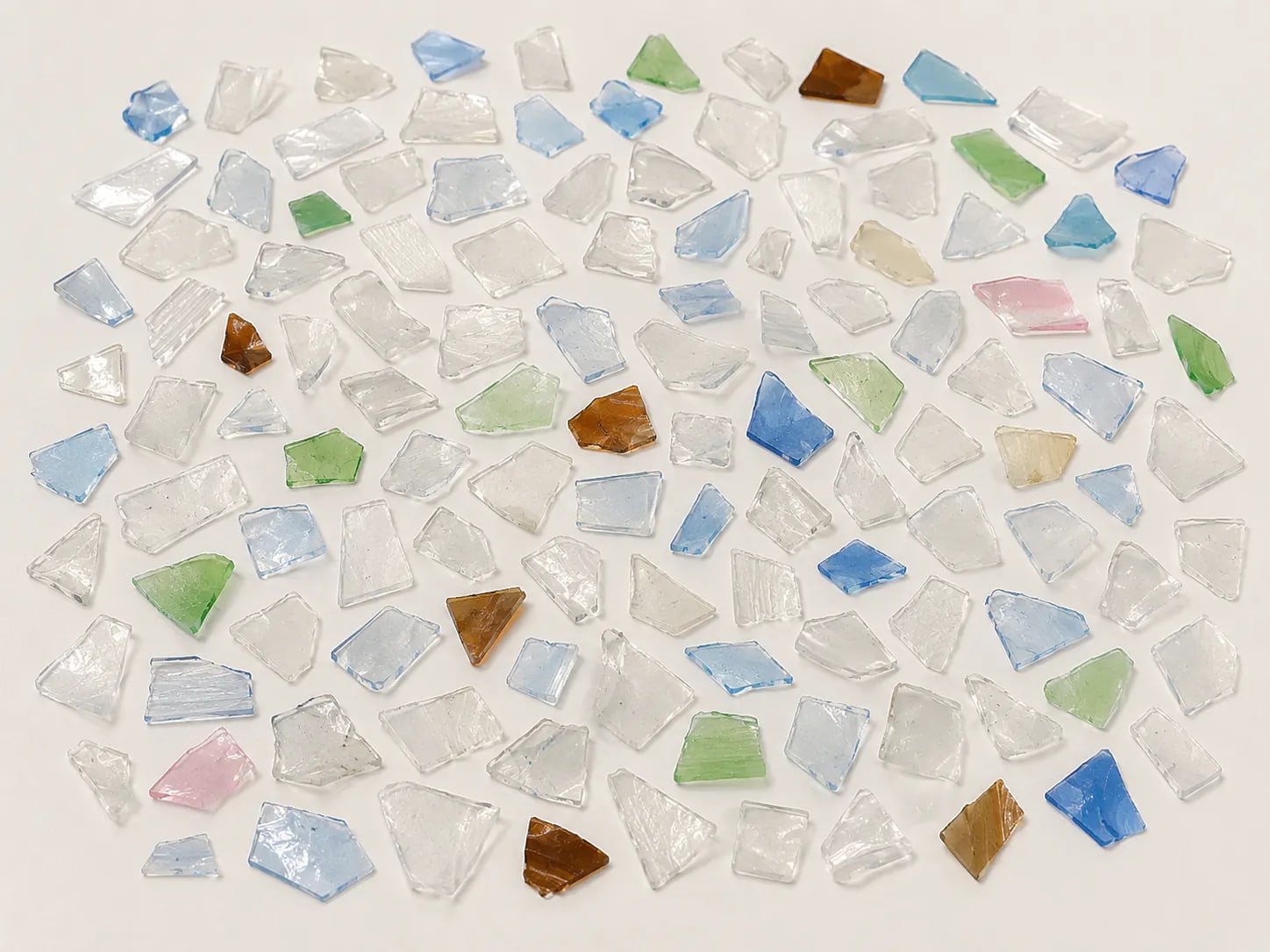
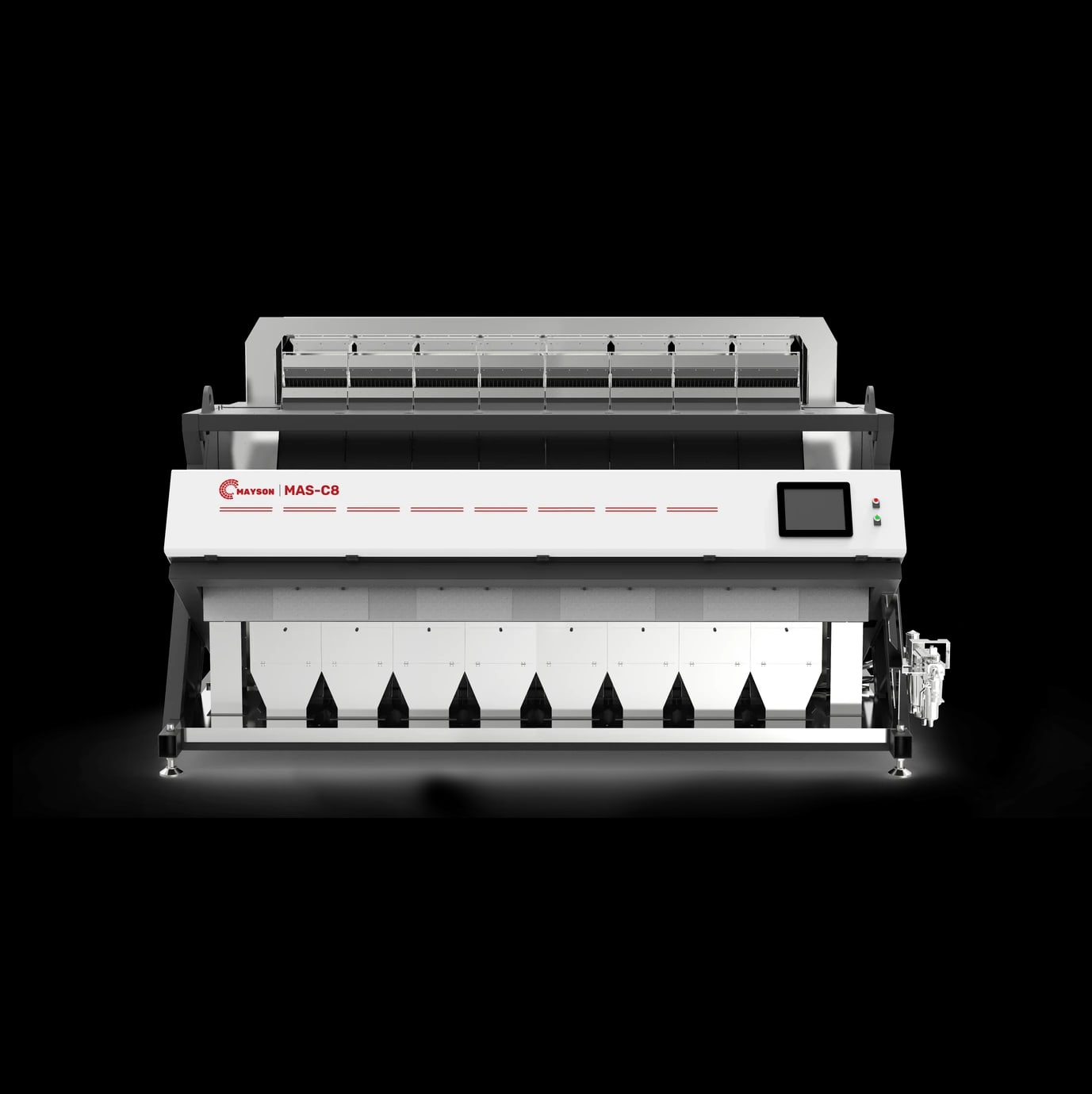
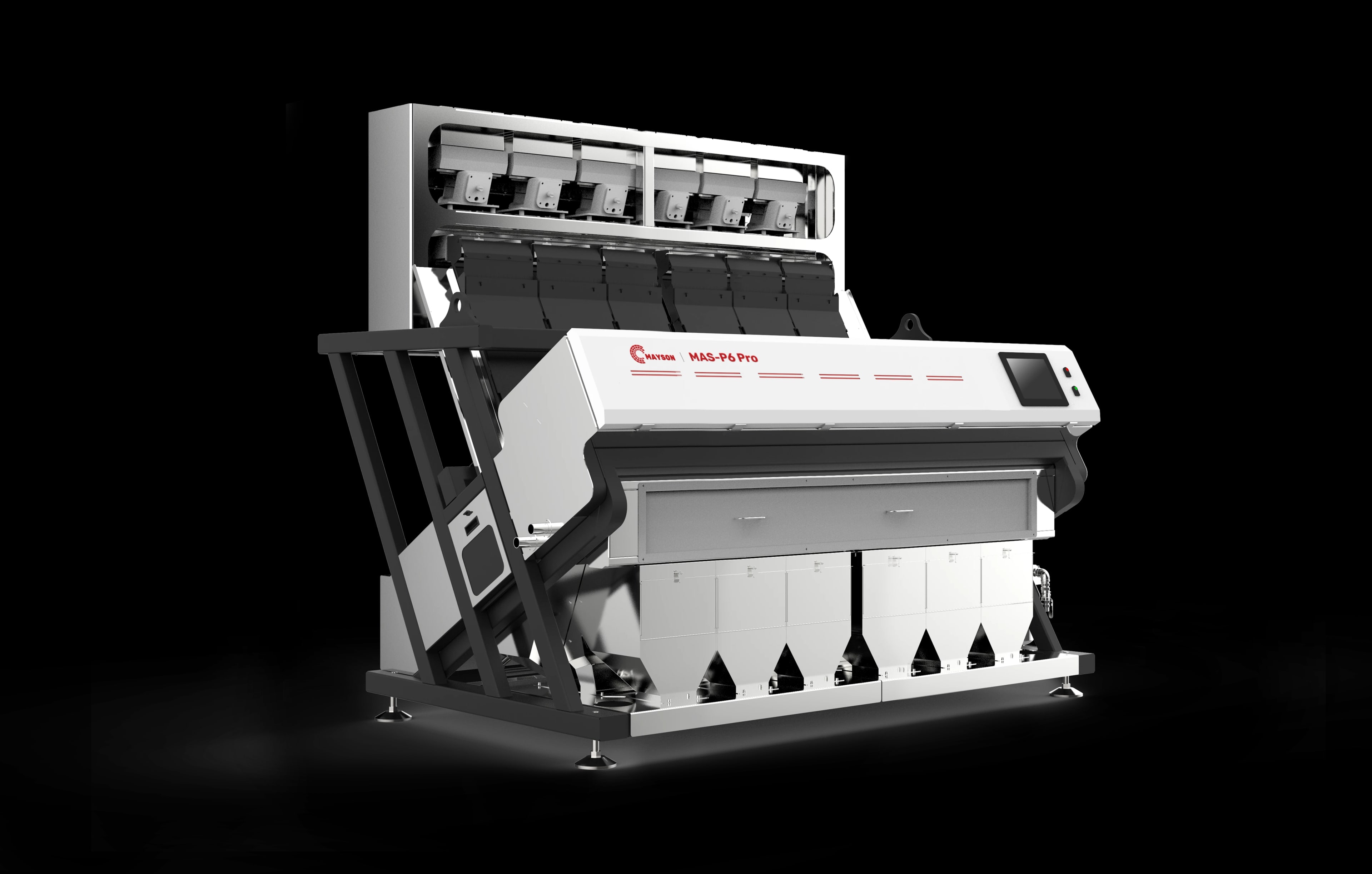
Precision flake color sorting for PET and rigid plastics — recovers clear, light-blue and green fractions and removes off-color, opaque and black pieces.
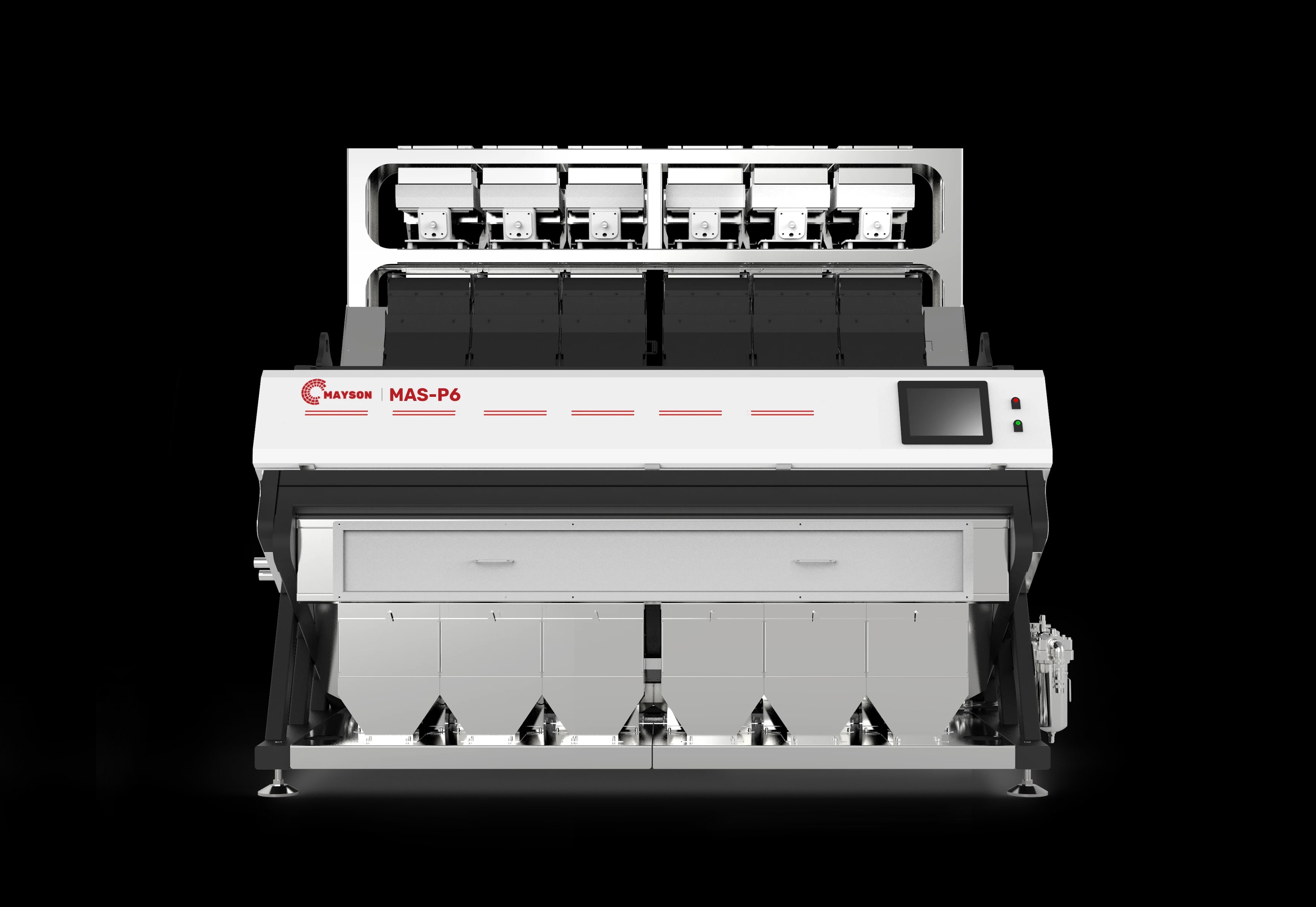
Removes PVC, PP, PE and other non-PET contaminants from PET flake streams to deliver high-purity PET before color sorting.
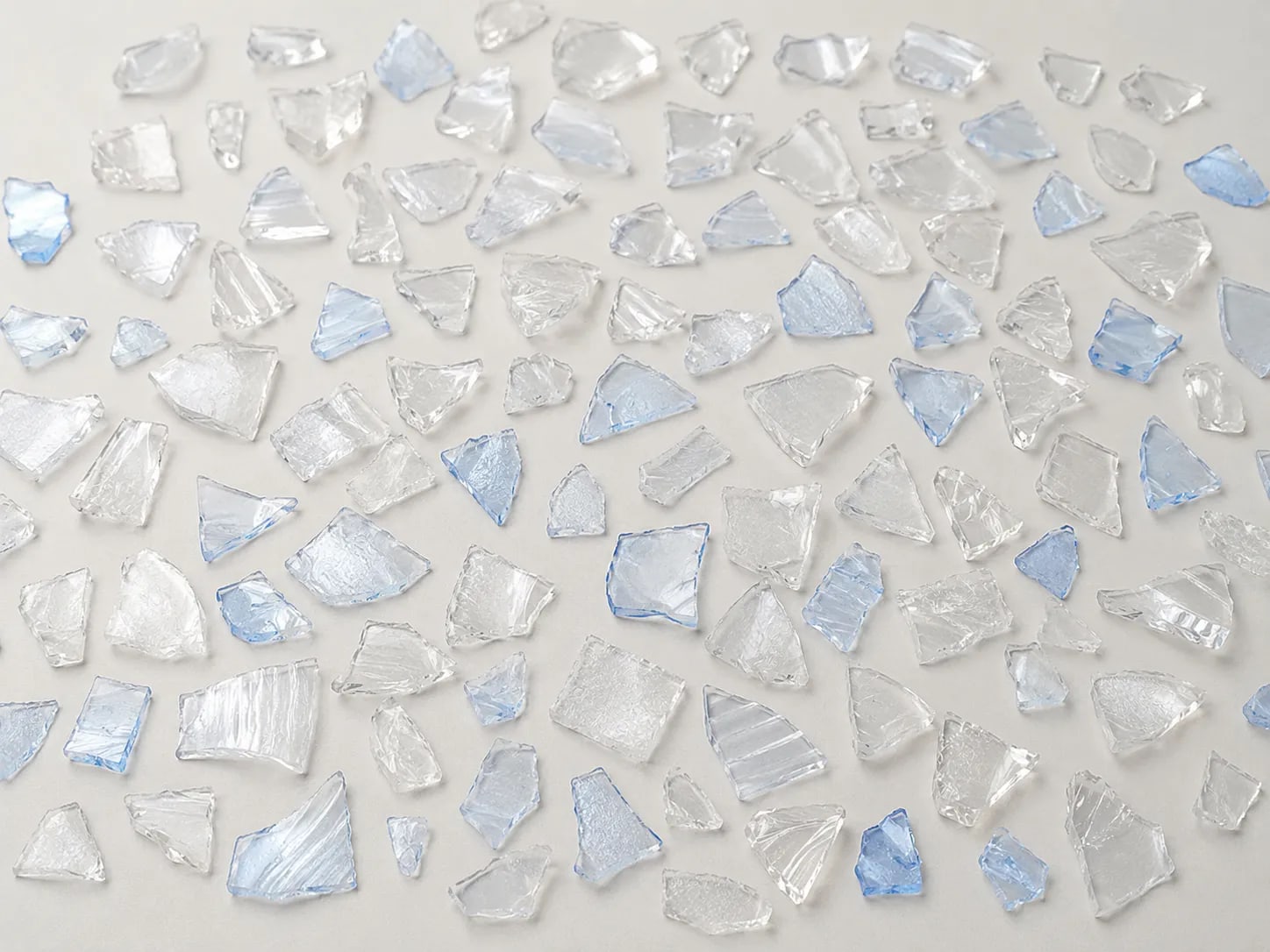
Material recognition with multi-spectral analysis separates visually similar rigid flakes — PP, PE, ABS, PS, PC and PMMA — with minimal loss.
Material forms
A plastic project should not start from a machine name. Separate whole bottles from prepared flakes, then decide whether the boundary is color, polymer type, or both.
Before size reduction · MAS-B
Post-consumer bottles arrive mixed by polymer, color, label condition and deformation. Sorting these before shredding protects flake quality downstream.
After preparation · MAS-C
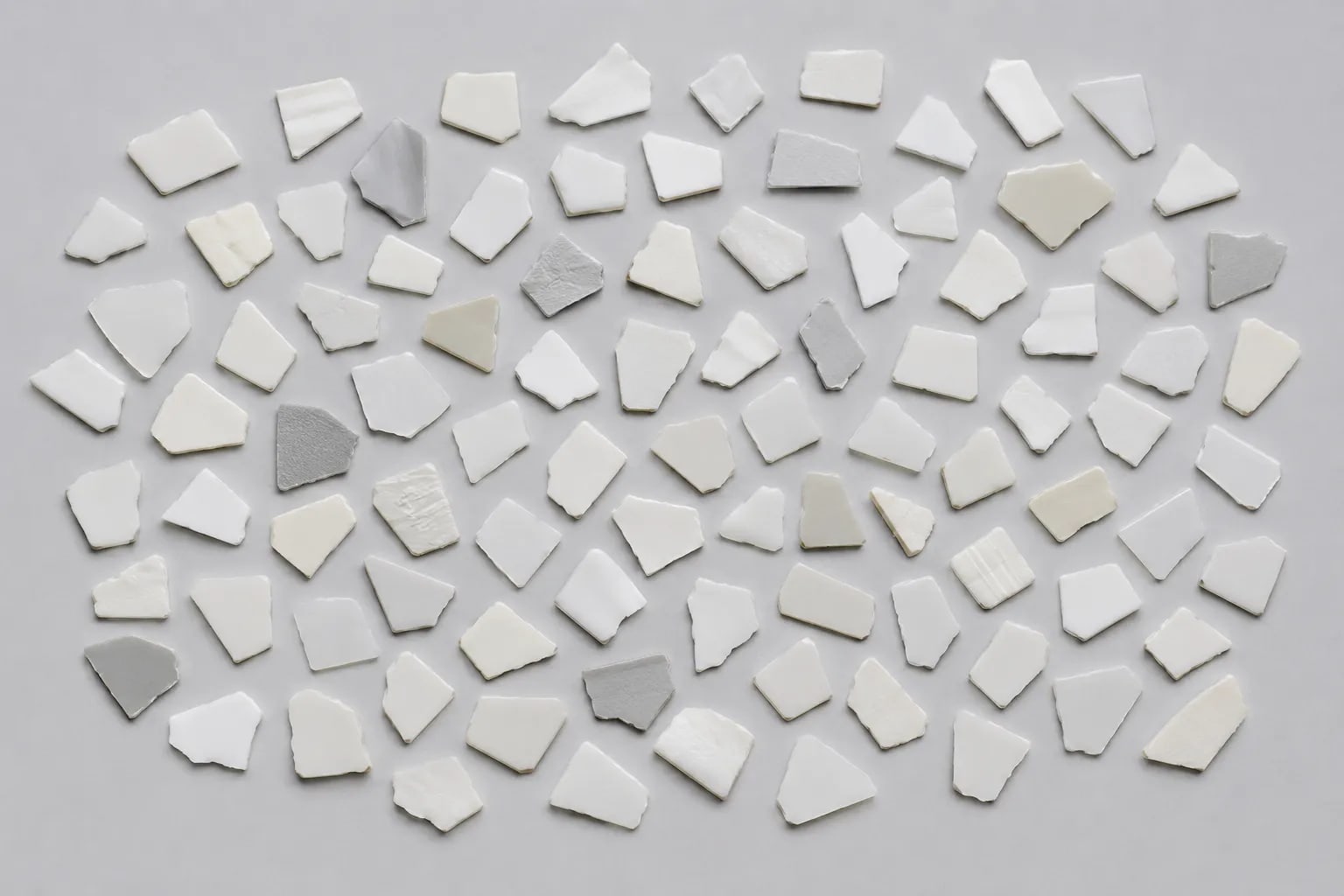
Washed, dried flakes are graded by visible color and opacity. Clear, light-blue and green fractions are separated from off-color, opaque and black pieces.
Material recovery · MAS-P
When visible color alone cannot define quality, PET flakes are purified by removing selected non-PET polymers — PVC, PP, PE and others.
Difficult polymers · MAS-P Pro
PP, PE, PS, ABS, PC and PMMA can look identical after washing, especially in white, milky or transparent feed. Material recognition combined with color separates them.
Sample explorer
Switch between material families on the left tabs, then click any class to swap the sample on the left — feed, accepted product, recovered fractions and reject classes from real MAS sorting examples.
Recovering a clean bottle stream from mixed intake, decided before shredding.
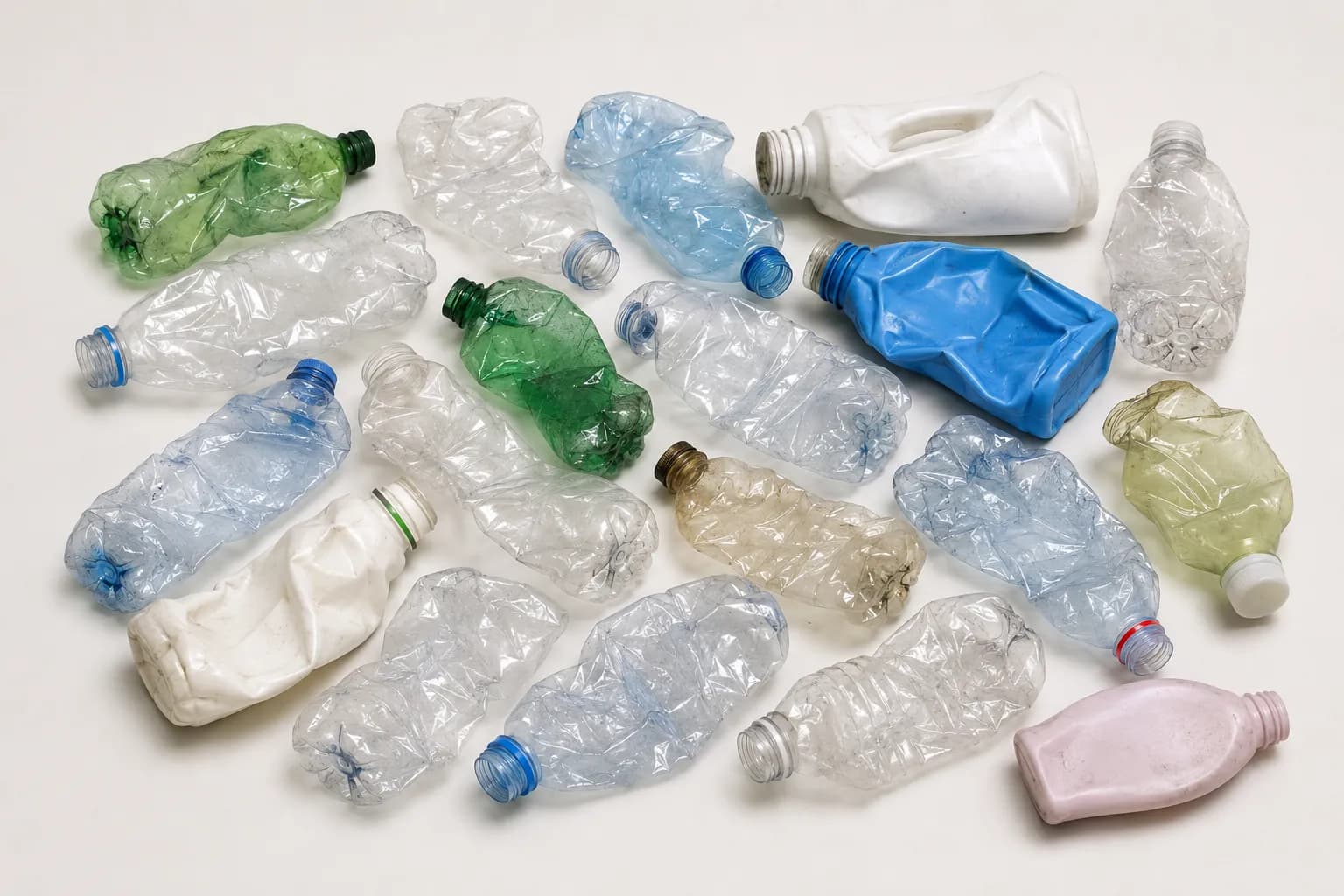
Incoming whole bottles — PET mixed with non-PET, labeled, capped and compressed examples.
Accepted and reject classes are always confirmed on your representative samples before a configuration is quoted.
Reject and contaminant classes
These classes are defined during sample review. The mix of off-color, off-polymer and foreign material is what makes one plastic stream different from another.
Fragments outside the accepted color and transparency range — yellowed, amber or mixed-tone pieces that break a clear or light-blue target.
Opaque, milky and carbon-black pieces that reduce clarity. Carbon-black also absorbs the NIR signal and needs a visible-light or sample-led approach.
PVC, PP, PE, PS, PA, ABS-FR, PMMA, PC/alloy and similar polymers that contaminate a PET stream and must be removed for high-purity recovery.
Label fragments, ring caps, sleeves and film pieces that change visible appearance and the practical sorting boundary.
Dirt, metal fragments, paper, wood and other non-plastic foreign material introduced through collection and handling.
Transparent, light-blue, milky and dirty pieces that look similar but require different accept/reject decisions — the reason borderline samples matter.
Sample-led from the start
Accepted, rejected and borderline examples turn this material guide into a real configuration direction across MAS-B, MAS-C, MAS-P and MAS-P Pro.
Match a sorter
Match the input form and accept/reject decision to a product direction — avoid choosing by plastic name alone.
Recommended technologies
Not every machine uses every layer. The combination is selected for the material, the reject classes and the line.
Buyer questions
No. The product direction is chosen by input form and target decision. Whole bottles (MAS-B), color flakes (MAS-C), PET material sorting (MAS-P) and difficult mixed polymers (MAS-P Pro) have different handling and inspection requirements.
No. MAS-B is framed for whole-bottle sorting before size reduction. Flake projects should be reviewed under MAS-C, MAS-P or MAS-P Pro.
MAS-C is positioned around visible color and appearance sorting. Polymer identification and material separation should be reviewed under MAS-P or MAS-P Pro, where the selected configuration supports it.
MAS-P targets PET purification by removing selected non-PET. MAS-P Pro is for streams where several rigid polymers (PP, PE, PS, ABS, PC, PMMA) look alike and must be separated by material. If the same stream also needs color cleanup or black-flake rejection, that is MAS-PC Pro.
NIR cannot reliably read carbon-black plastics because they absorb the signal. Those streams are reviewed with visible-light and sample-led approaches, and the result is confirmed by testing.
Transparent, light-blue, milky and dirty pieces can look similar while needing different decisions. Representative accepted, rejected and borderline examples are what define a stable recipe boundary.
No. Those values are only discussed after sample testing, selected configuration and line context are confirmed. Public pages avoid unverified performance claims.
Start from material form, not a machine name. Whole bottles → MAS-B; prepared flakes → decide the boundary: visible color only → MAS-C; PET vs non-PET → MAS-P; PET plus color → MAS-PC; difficult polymers (PP/PE, ABS/PS) → MAS-P Pro; difficult polymers plus color → MAS-PC Pro.
Whole-bottle sorting (MAS-B / MAS-B Pro) happens before shredding, while color, shape, label and material direction are still readable. Flake sorting (MAS-C / MAS-P / MAS-PC / MAS-P Pro / MAS-PC Pro) happens after crushing and washing, for higher-purity flake purification.
Choose the PC versions when the same flake stream needs both material sorting and visible color cleanup in one platform. MAS-PC adds color to MAS-P (PET purification); MAS-PC Pro adds color to MAS-P Pro (difficult polymers).
No. These are chute-type systems for whole bottles or rigid flakes and fragments. Pellets bounce in the chute, making recognition and ejection unstable, and soft film is too light for controlled air ejection — even after shredding.
AI visual preview
Upload plastic images and see an indicative accept/reject visualization before committing to a physical test.
Open AI previewReal material test
A representative sample test defines the MAS direction, recipe boundary and reject classes for your line.
Request a real material test