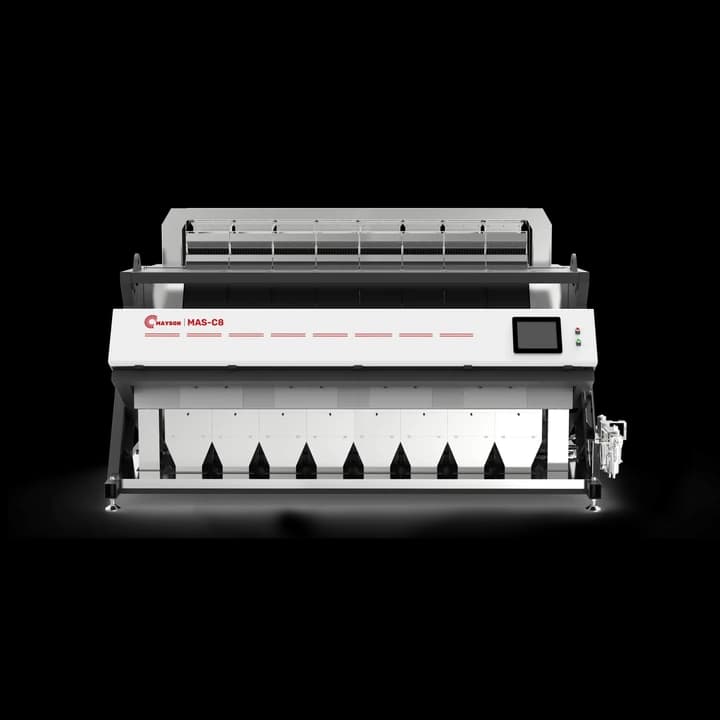
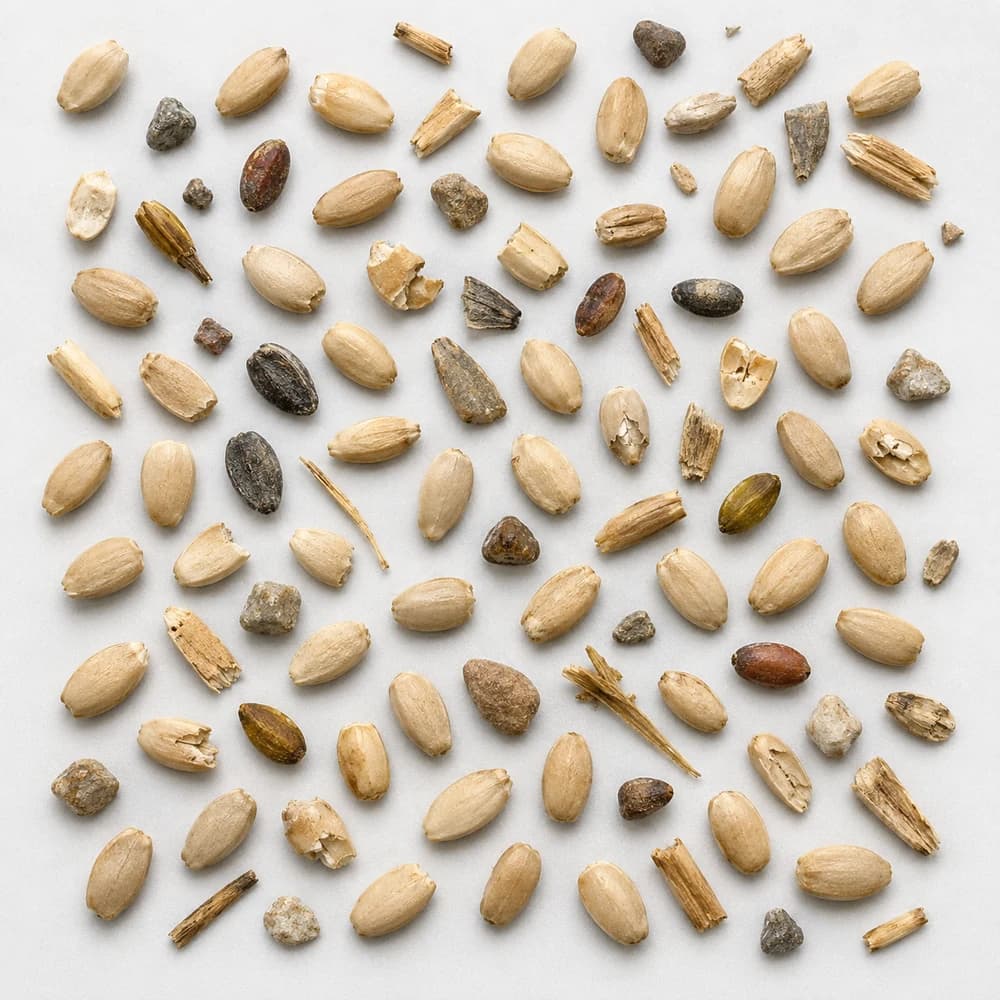
Stones & soil clods
Mineral foreign material close in size to the seed, removed on color and contrast.
Food and agriculture
Agricultural seed streams vary by season, origin and crop year, so natural variation can look a lot like a defect. This page defines what to inspect — and why the accept / reject classes have to be confirmed on your real samples.
Material types
Color, size and surface differ across crops, so the accepted-product window is set per stream. Click a type to see what defines it.
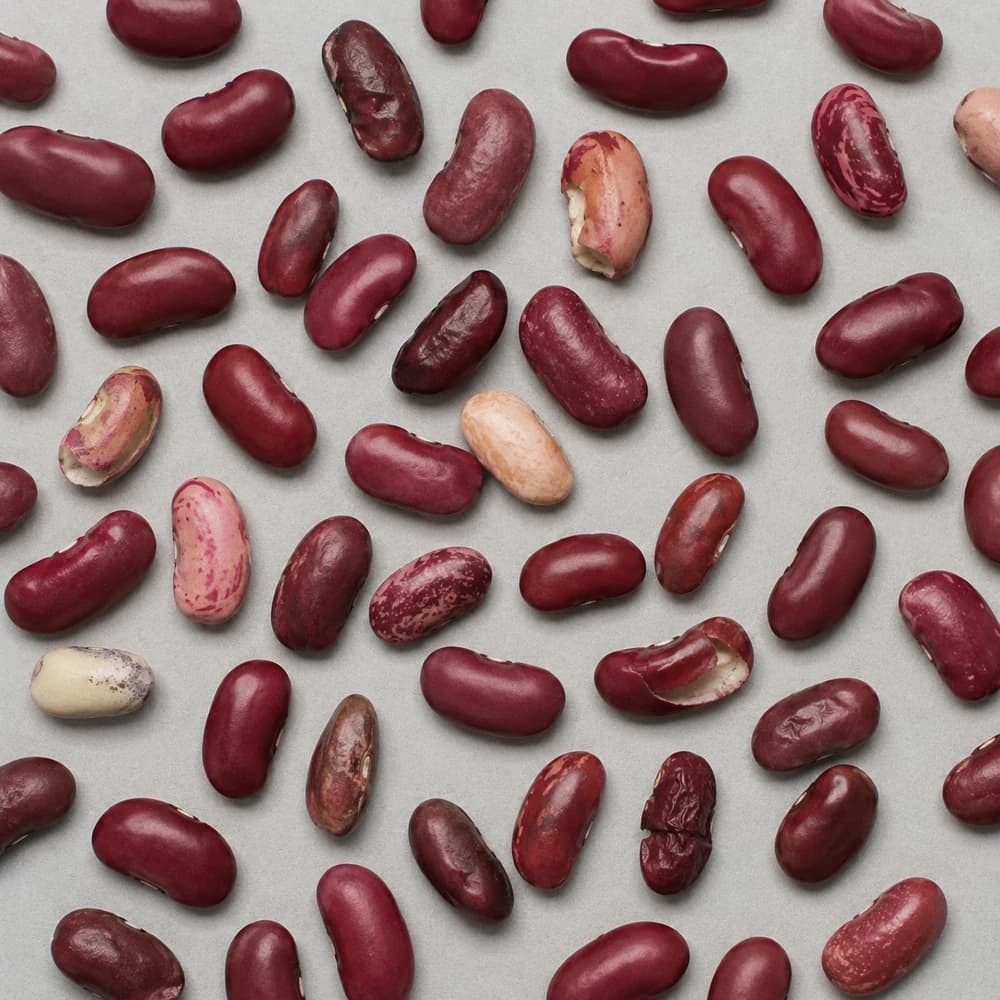
Deep red beans where color uniformity, skin damage and discoloration are the main grading targets. Splits and wrinkled skins are common reject classes.
Visible defects
Each class is defined and confirmed on real seeds — not assumed from generic wording.
Mineral foreign material close in size to the seed, removed on color and contrast.
Pods, stems and chaff carried in from the field that must leave the accepted stream.
Visibly mouldy, stained or weather-damaged seeds graded out for food quality.
Splits, halves and chipped pieces separated when whole-seed product is the target.
Greens, darks or bleached pieces outside the accepted color window for the crop.
Other crop seeds, glass, plastic or packaging debris defined as reject during testing.
Accept / reject
Sorting is defined by what stays in the accepted product and what is pulled into the reject — confirmed on representative samples.
FeedIncoming product carries good seeds plus stones, stems, off-color and broken pieces.
Illustrative only. Real grading depends on seed color, size, surface condition, presentation and the confirmed recipe.
Why it needs testing
Seed streams change with season and origin, so a recipe is built from evidence, not assumptions.
Natural color and shape spread across a crop year can resemble a defect — the accepted window has to be tuned on real seeds.
Stones and seeds close to product size often need a dedicated sample test to confirm reliable separation.
AI-assisted recognition stays anchored to verified accepted and rejected examples rather than open-ended claims.
How it works
A controlled, sample-led loop tuned to the accepted and reject classes you confirm in testing.
Seeds are metered and spread into an even layer so every piece can be inspected without overlap.
Accepted color, size and surface ranges plus the named reject classes are set from your real samples.
Lighting and cameras read color, shape and surface — with multi-view used where seeds present unevenly.
Off-class pieces are ejected and the reject stream is reviewed so good product is not lost.
Recipe, accepted window and reject review are handed to the operator after the result is confirmed.
Inspection path
Beans and seeds are typically a visible-color and shape problem, supported by AI-assisted recognition and multi-view inspection.
Online preview
Upload sample photos for a visual accept / reject preview before sending real material. Real sorting performance still needs a machine test.
Start AI Visual PreviewReal sample testing
A beans-and-seeds project should start from your real stream, including the accepted product and the off-color, broken and foreign pieces that must be removed.
Request a Real Material Test