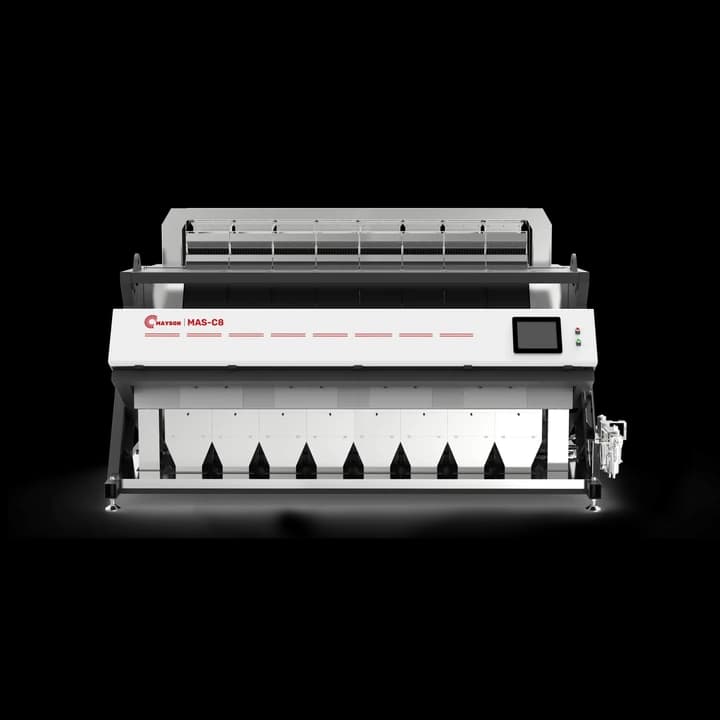
Shell & hull fragments
Shell, husk and hull pieces close in color to the kernel, removed on contrast and shape.
Food processing
Nuts are fragile and irregular, so defect visibility depends on orientation and surface exposure — and handling has to limit breakage. This page defines what to inspect; final machine configuration and yields come from a real sample test.
Material types
Kernel size, breakage risk, shell content and surface defects differ by product. Click a type to see what drives the grade.
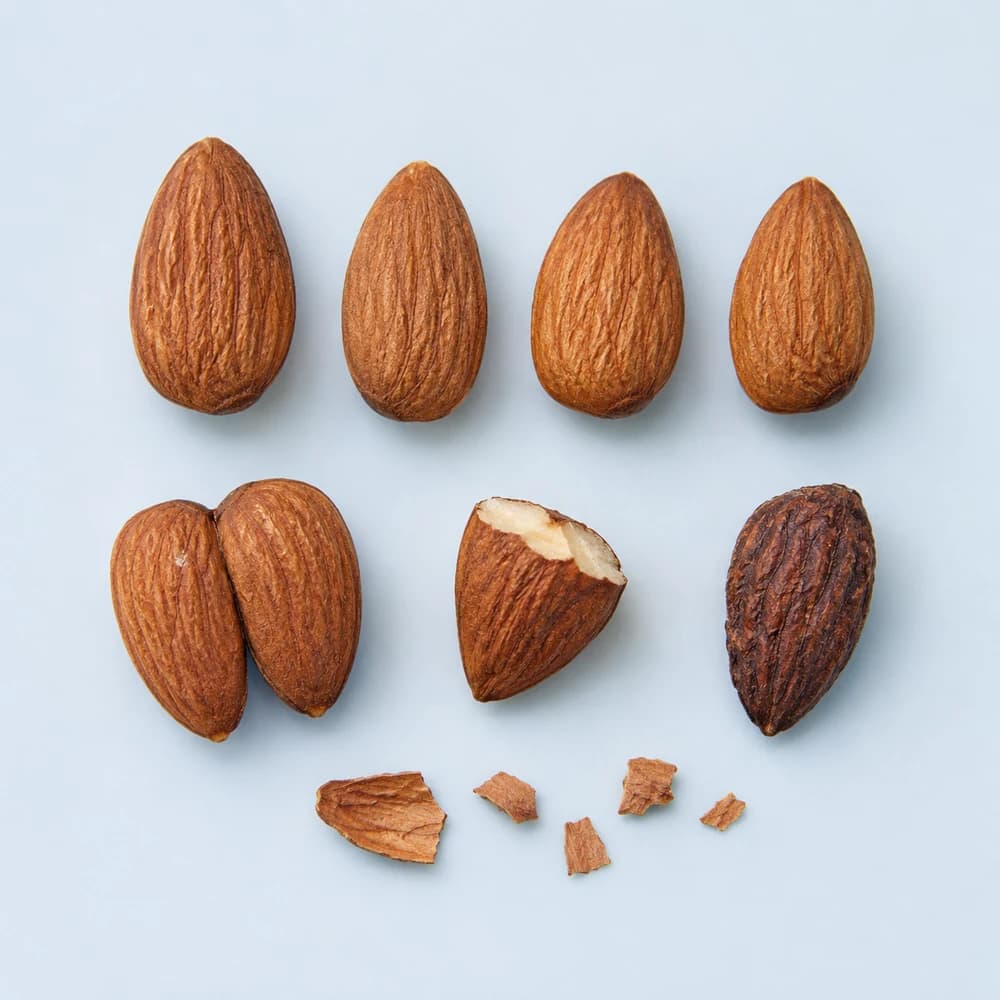
Whole kernels where shell fragments, doubles, chips and dark or shrivelled pieces are the typical reject classes.
Visible defects
Fragile product means each class is confirmed on real kernels, with handling tuned to limit breakage.
Shell, husk and hull pieces close in color to the kernel, removed on contrast and shape.
Halves, chips and splits separated when whole-kernel product is the target grade.
Scorched, stained or spotted kernels graded out for appearance and food quality.
Immature, shrivelled or undersize kernels outside the accepted size and fill window.
Stones, glass, metal and plant debris defined as reject during the sample test.
Mouldy, rancid-looking or insect-damaged kernels flagged for removal.
Accept / reject
What stays in the accepted kernel stream and what is gently ejected — confirmed on representative samples.
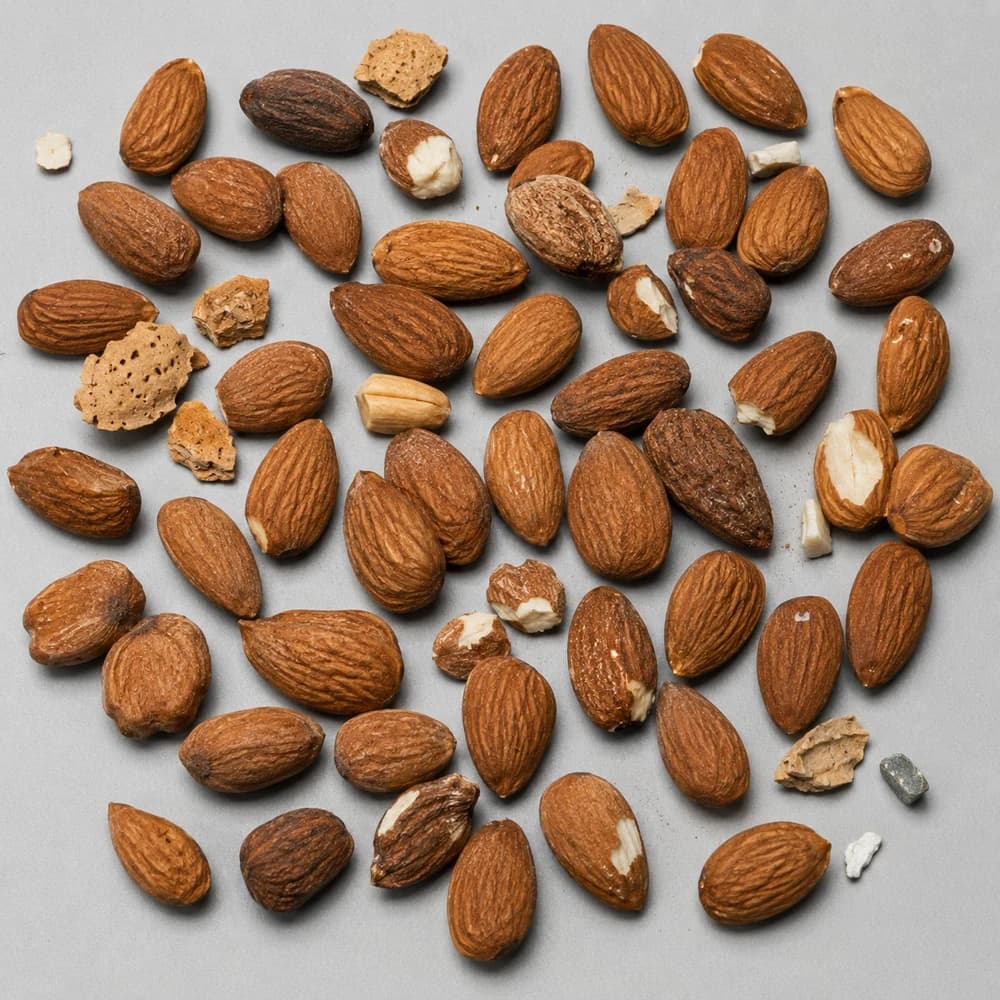
FeedIncoming product carries good kernels plus shell, broken, dark and foreign pieces.
Illustrative only. Real grading depends on kernel size, breakage, surface exposure, orientation, presentation and the confirmed recipe.
Why it needs testing
Nut grading is built from evidence because handling and presentation strongly affect the result.
Feeding and ejection must be gentle enough to protect whole kernels while still separating defects.
A defect on one face can be hidden on another, so multi-view exposure is often needed to see it.
Yield and purity depend on product, sample condition and target defects, so they come from a real machine test.
How it works
A sample-led loop tuned to fragile product and the accept / reject classes you confirm in testing.
Kernels are metered and spread with handling tuned to limit breakage before inspection.
Accepted color and size plus shell, broken, dark and foreign reject classes are set from your samples.
Lighting and multi-view cameras are arranged so orientation-dependent defects are actually seen.
Defects are ejected gently and the reject stream is checked so good kernels are not lost.
Recipe, accepted grade and reject review are handed over once the result is confirmed.
Inspection path
Nut sorting combines visible-light inspection with AI-assisted recognition and multi-view inspection for orientation-dependent defects.
Online preview
Upload sample photos for a visual accept / reject preview before sending real material. Real sorting performance still needs a machine test.
Start AI Visual PreviewReal sample testing
A nut sorting project should start from your real product, including whole kernels and the shell, broken, dark and foreign pieces that must be removed.
Request a Real Material Test